
By Retrieve Lost Token | 23 June, 2026
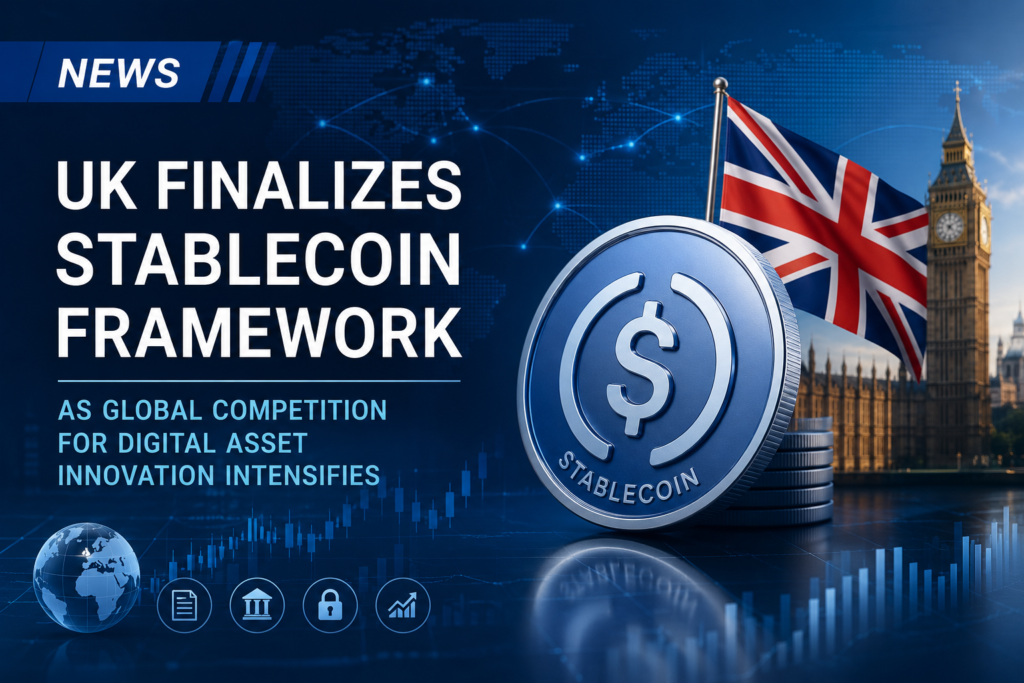
The United Kingdom has taken another significant step toward regulating the rapidly growing digital asset sector after the Bank of England released its final framework for sterling-backed stablecoins. The new policy introduces clearer rules for stablecoin issuers while easing some of the restrictions that had previously raised concerns across the cryptocurrency industry.
Stablecoins are digital assets designed to maintain a stable value by being linked to traditional currencies such as the British pound or the U.S. dollar. They have become an increasingly important part of the global cryptocurrency ecosystem, facilitating payments, trading, remittances, and decentralized finance activities.
Under the newly released framework, the Bank of England removed earlier proposals that would have imposed strict limits on individual stablecoin holdings. Instead, regulators introduced a cap on the total issuance of a stablecoin while also allowing a greater portion of reserve assets to be held in short-term government debt. Industry participants had argued that the original proposals would make it difficult for the United Kingdom to compete with other major jurisdictions pursuing digital asset innovation. Recent policy changes appear to reflect an effort to balance financial stability with market growth. (Reuters)
The development comes at a time when governments and regulators around the world are working to establish comprehensive frameworks for digital assets. The European Union has already implemented its Markets in Crypto-Assets (MiCA) regulation, while regulators in the United States, Asia, and the Middle East continue to develop their own approaches to supervising digital asset activities. The increasing adoption of stablecoins by financial institutions, payment providers, and investors has accelerated the demand for regulatory clarity. (Reuters)
Industry reaction to the Bank of England’s final framework has been mixed. Some market participants welcomed the regulatory certainty and viewed the framework as an important milestone for the development of a regulated digital asset ecosystem in the United Kingdom. Others argued that the rules remain more conservative than those found in competing jurisdictions and could still limit innovation if not adjusted further in the future. (Reuters)
The importance of stablecoins continues to grow globally as financial institutions explore tokenized assets, blockchain-based settlements, and faster cross-border payment systems. Several companies have already secured licenses under new European regulations to provide regulated digital asset services, demonstrating the increasing integration of cryptocurrencies into mainstream financial markets. (Reuters)
Regulatory developments are also occurring alongside heightened scrutiny of compliance, anti-money laundering controls, and sanctions enforcement. Governments worldwide have intensified efforts to prevent the misuse of digital assets for illicit activities while simultaneously supporting legitimate innovation within the sector. Recent enforcement actions involving cryptocurrency exchanges and cross-border digital asset transactions illustrate the growing focus on regulatory oversight. (Chainalysis)
For investors and market participants, the latest developments signal that digital assets are becoming increasingly embedded within the global financial system. While regulatory approaches differ from one jurisdiction to another, the overall direction remains clear: governments are moving toward greater oversight, increased transparency, and more defined operating standards for digital asset businesses.
As the regulatory landscape continues to evolve, stablecoins are expected to remain at the center of discussions surrounding the future of digital payments, tokenized finance, and blockchain-based financial infrastructure. The United Kingdom’s latest framework represents another step in the ongoing effort to integrate digital assets into regulated financial markets while maintaining safeguards for consumers and the broader economy.